Albion Online - Sandbox MMORPG
- 4.5
- Rating
- 10.00M
- Installs
- Free
- Price

 Analysis by App-foxy
I went into Albion Online expecting a mobile role-playing game that would simplify a large online world for a touchscreen. Instead, I found a demanding sandbox where nearly every useful item, profitable activity, and dangerous journey is connected to someone else’s work. That makes it unusually interesting on Android and iOS, but it also means the game asks more patience from me than a typical mobile RPG.
The central question is not whether it looks busy or has enough content. It is whether I want a game where progress comes from choosing a place in a player-driven world. If I enjoy gathering, crafting, trading, fighting, organizing a group, or slowly building a specialized character, this is a strong candidate. If I want a quick session with obvious rewards and a mostly guided story, I would look elsewhere.
What I considered before recommending it
I look at whether Albion Online can become part of a steady routine, not just whether its sandbox feels exciting at first. The practical test is whether a player can make progress in short, purposeful visits without turning every login into a long expedition. From there, it helps to consider how its different activities can keep a familiar routine from becoming repetitive.
You May Also Like

 Blood Strike: 2.5 Anniversary
Blood Strike’s Loadouts Turn Every Drop Into a Tactical Gamble
A close look at Blood Strike’s custom loadouts: how fast access to signature weapons reshapes its battle royale rhythm, rewards preparation, and narrows the gap between fights.

 Pandora - Music & Podcasts
Pandora’s Music Is Easy to Start, but Harder to Recover
Pandora’s strength is its low-effort path from a seed to a station. Its weak spot is how much confidence it asks you to place in connection, setup, and quiet recovery.

 8 Ball Pool
 Is Built on Rivalries, Rematches, and Routine
A close look at the rivalries, rematches, shared routines, and unanswered safety questions that turn a quick pool match into a persistent mobile community.

 Samsung Music
’s Quiet Strength Is Playing What You Already Own
Its reach comes less from spectacle than from dependable access to a personal library. That simplicity is both the app’s strongest retention engine and its ceiling.

 AccuWeather: Weather Radar
AccuWeather Review: A Quick, Clear Forecast for Everyday Decisions
For everyday plans, the best forecast is the one you can understand quickly. AccuWeather makes rain timing, radar, and local conditions easy to act on, with a few trade-offs.

 Hill Climb Racing
Why Hill Climb Racing Still Turns Crashes Into One More Run
A tiny car, a bumpy hill and one more upgrade: Hill Climb Racing keeps resurfacing because its simple chaos makes every near-miss feel personal.
More From Our News Desk



A sandbox RPG rather than a guided mobile adventure
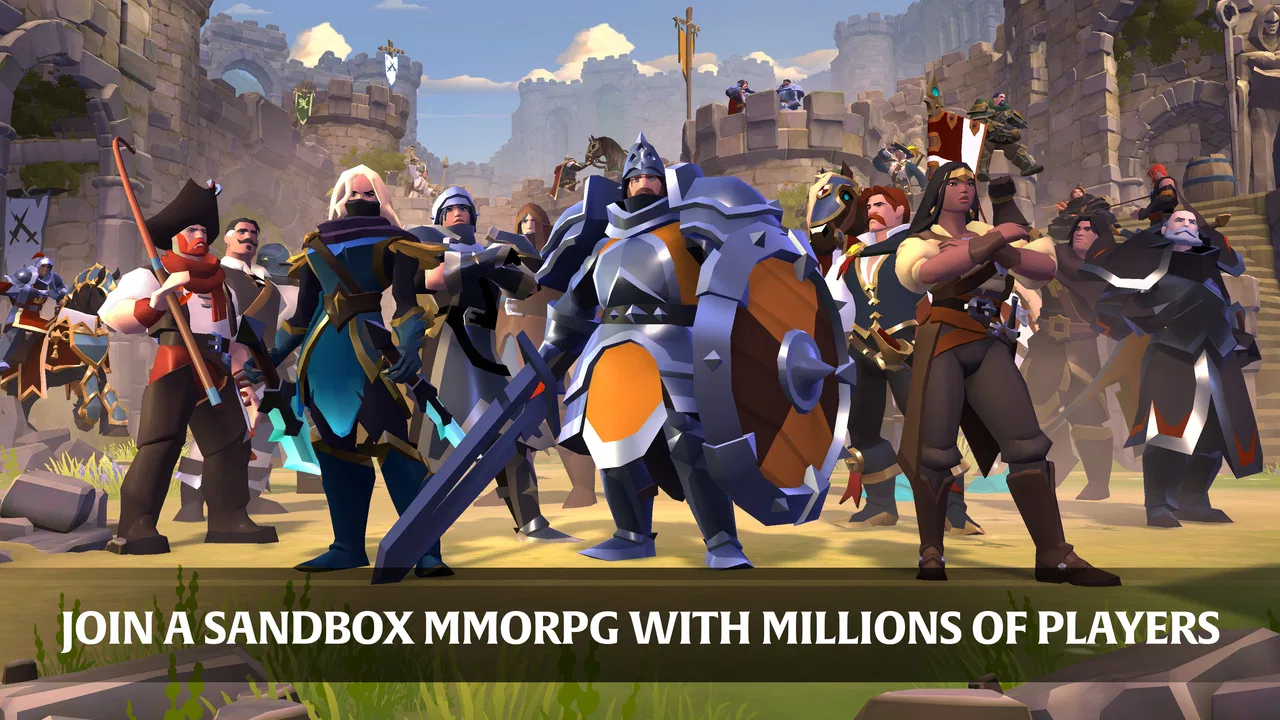
Albion Online is a role-playing game from Sandbox Interactive GmbH, and its identity is built around freedom rather than a fixed hero journey. I am not pushed through a narrow sequence of missions that tells me exactly what to do next. I can work toward better equipment, learn a trade, explore dangerous areas, join other players, or treat the economy as my main challenge.
That freedom is exciting, but it creates a decision problem immediately. New players can spend time doing activities that feel productive without understanding how those activities connect to their longer-term goals. I found it much easier once I chose a temporary purpose, such as earning enough silver for equipment, improving one gathering path, or learning a specific combat style.
The game is free to download and is rated Everyone 10+, which makes it easy to try without committing money at the start. It supports devices running Android 8.0 or later. The mobile release arrived on June 9, 2021, and the current version is 1.31.020.334027, so anyone installing it should still treat it as a substantial, actively maintained-style game rather than a tiny casual download.
The first hours are about learning relationships
My first useful realization was that equipment is more than a collection of rewards. What I wear affects the role I can perform, the risks I can take, and the kind of work that makes sense. A combat setup may help me clear enemies, while a gathering-oriented setup makes travel and resource collection more worthwhile. Changing direction is possible, but constantly changing direction can slow progress.
I recommend resisting the urge to unlock everything at once. A focused beginning gives the progression board more meaning and helps me notice which materials, weapons, or activities I actually enjoy. I also learned to keep a small reserve of usable gear instead of treating every item as disposable. In a game with meaningful danger, losing equipment can turn an exciting trip into a costly lesson.
The interface is workable on a phone, though it is not as effortless as a simple action RPG. Movement, targeting, inventory handling, and ability use all compete for screen space. I became more comfortable after adjusting my habits: I kept my combat setup simple, avoided unnecessary inventory sorting during dangerous travel, and used short sessions for safe preparation rather than forcing every session to become an expedition.
Why the world feels different from most mobile RPGs
Many mobile role-playing games are built around collecting characters, following a campaign, and repeating familiar battles for upgrades. Albion Online takes a different route. Its appeal comes from the connection between players and the consequences of their choices. The sword, tool, or resource I use may represent someone else’s gathering and crafting work, while my own activity can support another player later.
That creates a satisfying sense of place. A town is not merely a menu with decorations; it can become a practical base for refining materials, preparing equipment, or planning the next move. I began to think about routes, storage, and risk instead of simply asking which reward was waiting at the end of a quest.
The trade-off is that the game can feel slower than alternatives designed around constant spectacle. There are stretches where preparation matters more than action. I may spend time sorting supplies, deciding what to carry, or traveling toward a better opportunity. Those moments are valuable to me because they make the world feel coherent, but players who want immediate combat may see them as chores.
Choosing a role without locking myself into one forever
One of Albion’s best qualities is that my role is closely tied to what I use and practice, not just to a permanent class selection made at the beginning. That gives me room to experiment. I can approach the game as a fighter, gatherer, crafter, trader, or a blend of these, then gradually discover which loop holds my attention.
However, flexibility does not mean every choice is equally efficient. A character trying to progress in every weapon line and every resource path will spread time and materials thinly. My practical advice is to choose one main activity and one supporting activity. For example, gathering can fund equipment, while a combat setup makes the gathering trip safer. This pairing feels more sustainable than pursuing unrelated goals.
Another useful habit is to separate “learning gear” from “valuable gear.” I use inexpensive equipment when testing an unfamiliar area or ability combination. That lets me learn positioning and timing without turning every mistake into a major setback. Once I understand the route or encounter, I can decide whether better equipment is worth the added risk.
Where it wins for committed players
The strongest advantage is the feeling that progress has context. Improving a weapon or gathering skill is not just filling a bar; it changes what I can contribute and which opportunities become realistic. A player who enjoys making plans will find more depth here than in a game where the next upgrade is always obvious.
The open-world player-versus-player design is another major point of difference. Dangerous areas create genuine tension because travel and equipment choices matter. I cannot assume that every trip is a safe shopping run. That risk gives successful returns more weight, especially when I have carried useful materials or gear that I do not want to lose.
Group play also benefits from this structure. A party is not only a collection of damage dealers racing through enemies. Different specialties can support a shared goal, and a coordinated group can make activities feel more purposeful. I enjoy that the game rewards communication and preparation, although it is less convenient for someone who wants to remain completely independent.
The economy is compelling because it turns ordinary resources into decisions. I can sell materials, use them, save them, or transport them toward a different market opportunity. I do not need to become a full-time trader to benefit from this system. Even basic awareness of what I gather and what I consume helps me avoid wasting time.
Three practical habits that improved my experience
I plan each risky trip around a return condition. Before leaving, I decide what amount of loot or progress would make the journey worthwhile. This prevents me from staying too long simply because the next resource node or encounter is nearby.
I keep my equipment choices tied to a specific task. A setup for clearing enemies is not automatically the best setup for transporting materials or learning a new area. Treating gear as a tool for the current job makes the inventory easier to manage.
I use the economy as feedback rather than as a source of random speculation. If I repeatedly gather materials that I never use or sell, that is a sign to change my route or supporting activity. Small adjustments are more reliable than chasing every apparent opportunity.
These habits are not glamorous, but they address the parts of the game that cause the most frustration: wasted travel, overconfident equipment choices, and unfocused progression. They also make short mobile sessions more useful because I can log in with a clear task instead of wandering through menus.
Where a different kind of RPG may suit you better
I would not recommend Albion Online to someone who mainly wants a personal story with memorable scripted companions. The sandbox structure leaves more of the meaning to the player, so the emotional payoff comes from goals I create and the consequences of pursuing them. A story-led RPG is a better fit if narrative direction is the main reason I play.
It may also be the wrong choice for players who dislike losing progress or equipment through risky decisions. Even when the danger feels fair, the result can be discouraging if I am not prepared to accept setbacks. A safer, more forgiving mobile RPG is preferable when I want relaxation without monitoring routes, supplies, and the value of what I am carrying.
Players who prefer automatic progression may find the manual choices tiring. Albion Online asks me to pay attention to equipment, activities, travel, and the economy. It is not a game I can fully enjoy by checking in briefly and collecting rewards. Short sessions work well when they have a purpose, but the game is better suited to someone willing to learn its systems.
There is also a social consideration. Although I can play alone, the broader experience becomes richer when I interact with other players or participate in organized activities. If I want a completely private game with no dependence on a wider community, an offline RPG or a more self-contained online title may be a better match.
Mobile play, time commitment, and the cost of changing direction
Playing on a phone gives Albion Online a useful convenience: I can check the market, prepare equipment, gather in a familiar area, or complete a focused task without sitting at a computer. I would still choose a larger screen when I expect a long combat session or need to manage several parts of my inventory. Touch controls are serviceable, but complex situations demand more concentration than casual mobile games.
The real cost of switching into the game is not the download price. It is the time needed to understand how the different loops support one another. A player coming from a conventional RPG may initially ask where the obvious quest chain is or why a small improvement requires several connected activities. Once that mental shift happens, the systems become easier to read.
There are optional in-app purchases ranging from $0.99 to $209.00 per item. I would approach them carefully and decide first whether I enjoy the underlying game without spending. The important question for me is not whether optional purchases exist, but whether I am using them to support a game I already like or trying to bypass the learning and planning that make the sandbox rewarding.
With a 4.5 average from around 388,000 ratings and over 10 million installs, the game clearly has a large audience. That does not make it automatically suitable for everyone, but it does mean a new player is entering an established online environment rather than a deserted experiment. The community scale can add energy and opportunity, while also making the world feel less predictable.
Who should install it, and who should skip it
I would recommend it to players who enjoy setting personal goals, accepting setbacks, and learning through experimentation. It is especially appealing if I like the idea that gathering, crafting, combat, trading, and group activity are parts of one connected world. The game rewards curiosity more than rushing through a checklist.
It is also a good choice for someone who wants one mobile RPG that can grow with changing interests. I can begin with combat, become more interested in resources, and later explore the economy or organized play. That range gives the game lasting value, provided I am comfortable creating my own direction.
I would skip it if my ideal session lasts only a few minutes and must deliver a clear reward every time. I would also skip it if player-versus-player danger sounds stressful rather than exciting, or if managing equipment and materials feels like administrative work. In those cases, a guided RPG with safer progression will probably provide more enjoyment with less friction.
My recommendation after weighing the trade-offs
Albion Online is one of the more distinctive role-playing games I have played on mobile because it treats the world as a system rather than a backdrop. Its best moments come from preparation paying off: returning safely with valuable materials, finding a role that fits my play style, or turning a modest plan into a useful contribution for other players.
Its weaknesses are inseparable from its strengths. Freedom can feel directionless, danger can make progress feel fragile, and the interface requires patience. I would not describe it as an effortless pick-up-and-play RPG. I would describe it as a serious sandbox that happens to be available on a phone or tablet.
My clear recommendation is to try it free if I want a player-driven world and am willing to learn gradually. I would begin with inexpensive gear, choose one main progression path, and treat the first sessions as orientation rather than a race. If that process feels satisfying, the game can become a long-term hobby. If it feels like too much planning for a mobile RPG, I would move to a more guided alternative without regret.
For me, the deciding phrase is meaningful freedom with real responsibility. Albion Online gives me more control than many mobile RPGs, but it expects me to use that control thoughtfully. That is exactly why I recommend it to patient players, and exactly why I would not recommend it blindly to everyone.
FAQs for Albion Online - Sandbox MMORPG
01What is Albion Online and how does it differ from other MMORPGs?
Albion Online is a sandbox MMORPG that emphasizes player-driven economies and open-world PvP combat. Unlike many MMORPGs, it features a classless progression system, allowing players to freely switch roles by changing their equipment. The game is known for its player-driven economy, where all items are crafted by players, and its full-loot PvP system, which adds a layer of risk and reward to exploration and combat.
02Is Albion Online free to play?
Yes, Albion Online is free to play. However, it offers a premium subscription that provides several benefits, such as faster progression, additional learning points, and increased in-game currency. While the game is fully accessible without spending money, the premium status can enhance the gameplay experience by reducing grind and offering conveniences.
03What platforms can I play Albion Online on?
Albion Online is available on multiple platforms, including Windows, macOS, iOS, and Android. This cross-platform capability allows players to enjoy the game on both desktop and mobile devices with the same account, providing flexibility to play anywhere. However, a stable internet connection is required, especially for mobile gameplay, to ensure smooth performance.
04How does the player-driven economy work in Albion Online?
Albion Online's economy is entirely player-driven, meaning that all items and equipment in the game are crafted by players from resources gathered in the world. This system encourages trading, cooperation, and competition among players. The marketplace is a central hub where players can buy and sell goods, making economic strategy and resource management key aspects of gameplay.
05What is the PvP experience like in Albion Online?
PvP in Albion Online is intense and rewarding, featuring zones with varying levels of risk. Players can engage in open-world PvP in specific zones where they risk losing their gear upon death. This full-loot system adds excitement and tension to encounters, encouraging strategic planning and teamwork. PvP is a central component of the game, influencing territory control and guild warfare.
Pros
- Vast
- open-world exploration.
- Player-driven economy system.
- Cross-platform play available.
- Diverse and flexible combat options.
- Regular updates and events.
Cons
- Steep learning curve for beginners.
- Can be grind-heavy at times.
- In-game purchases can be pricey.
- Requires a stable internet connection.
- Not ideal for solo players.

Albion Online - Sandbox MMORPG
Gallery